
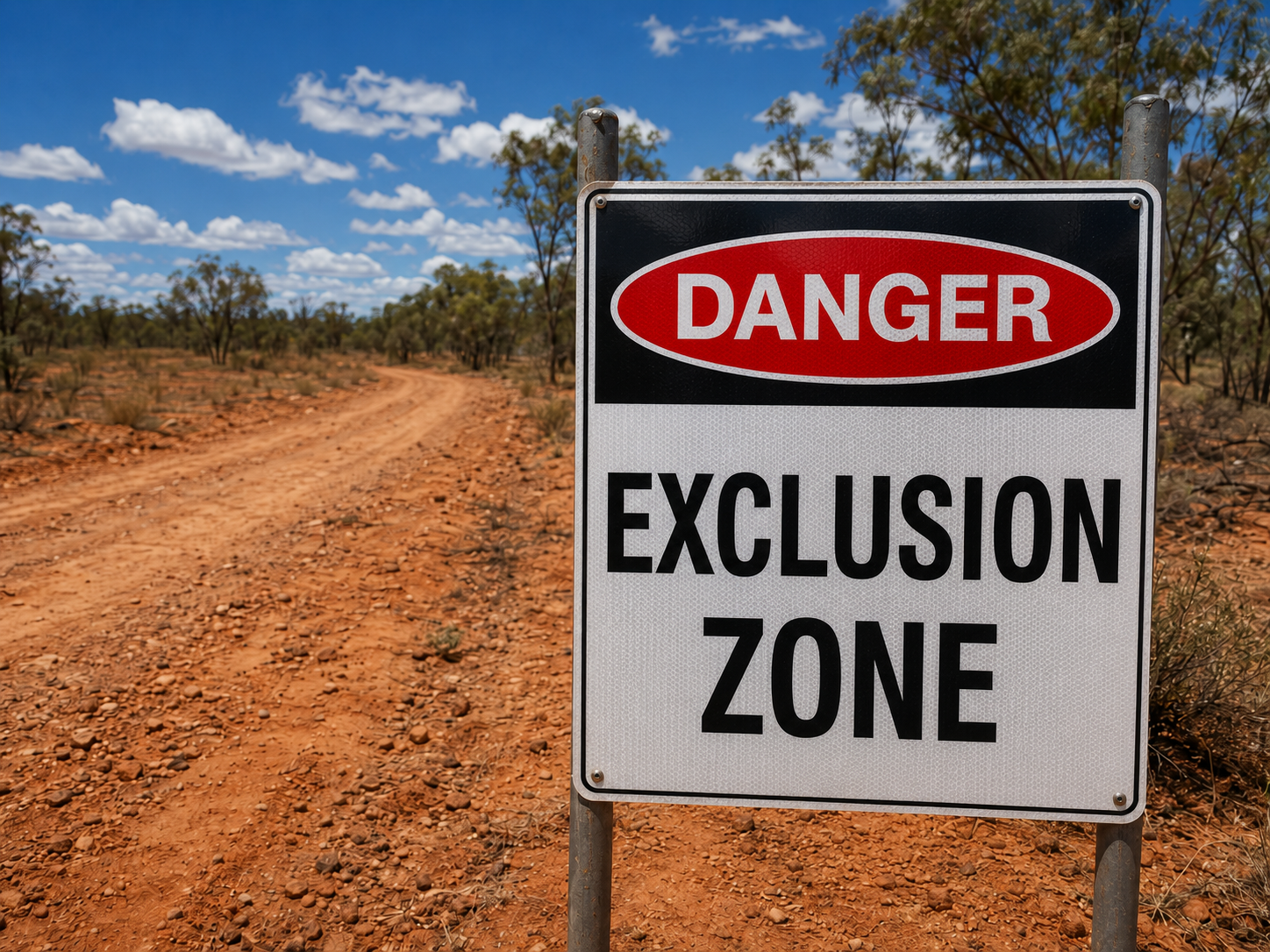
An exclusion zone only works if everyone on site can see exactly where it starts. That's the whole job of the signage: making the boundary impossible to miss, from a distance, in real site conditions.
What to decide before you order
- Temporary or permanent: is this zone tied to a specific job, or a fixed part of the site?
- Reflective or non-reflective: reflective is worth it anywhere low light, dust, or vehicle headlights are a factor, or where anyone could need to see it at night
- Mounting: gate, barrier, or freestanding, depending on how the zone is physically defined
- Standard wording or site-specific: most zones are covered by standard no-go and exclusion wording, but some sites need it tailored
A bit more detail
Sign size needs to match viewing distance, not just fit the available space. A sign that's easy to read up close but invisible from the cab of a truck isn't doing its job. If you're marking more than one zone type across a site, it's worth keeping the colour coding consistent so operators can read the zone at a glance without stopping to check.
If you're marking a large boundary, that often means the same sign repeated at intervals rather than one sign at a single access point. It's a more realistic way to keep the zone visible from any direction someone might approach it.
Browse our range of no-go and exclusion zone signage below, or send us your site layout if you need something specific to your boundary.